Cultivation & Care
The Idiot’s Guide to Houseplant Pests (And No, We Are Not Setting Fire to Everything)
Now Playing
Queen - Who wants to live forever?
Headspace
Calm, and Methodical

Pests are an inevitable part of keeping indoor plants—even in a meticulously managed collection.
Let’s be honest: every plant parent has experienced the moment. You’re wiping down a favourite leaf, you spot a tiny moving speck or a suspicious white smudge, and your mind instantly cycles through the five stages of panic:
- 1.) Denial: "It’s just dust. It'll brush off."
- 2.) Anger: "Where did you even come from, you microscopic freeloader? I live on the third floor!"
- 3.) Bargaining: "If I ignore it, maybe the plant will just absorb it."
- 4.) Depression: "My entire 200-plant collection is doomed. I am a botanical fraud."
- 5.) Acceptance (and the matchbox): The sudden, irrational urge to take a blowtorch to the entire jungle.
Put the lighter down.
Pests are an inevitable part of keeping indoor plants—even in a meticulously managed collection. They aren’t a moral failing or a sign that you're a bad keeper; they're simply an ecological reality. Once you learn how to identify them by their signatures, understand their mechanics, and implement a few foundational support habits, managing them stops feeling like an apocalyptic emergency and starts feeling like routine maintenance.
Part 1: Know Your Enemy (The Most Wanted List)
Different pests require entirely different strategies. If you treat a thrips infestation with the exact same approach you use for fungus gnats, you are going to lose. Here is how to tell them apart by the damage they leave behind.
1. Thrips
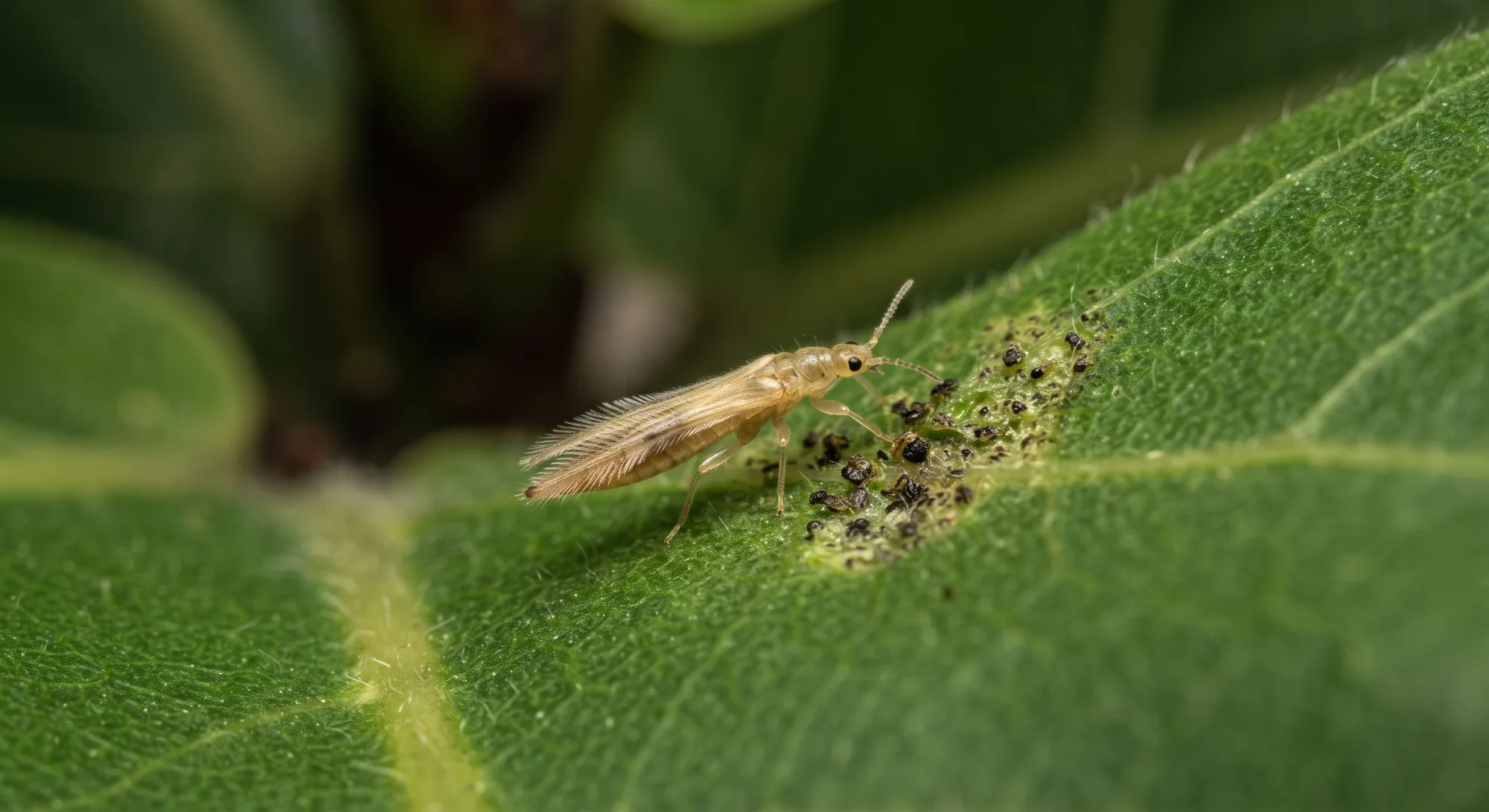
- What they look like: Microscopic, slender, racing-stripe insects (yellow, brown, or black) that look like tiny slivers of dark thread moving across a leaf.
- The Signature Damage: They rasp open plant cells and suck out the contents, leaving behind a silvery, stippled, or bleached patch peppered with tiny, tar-like black dots of frass (waste). They obsessively target tender new growth and uncurling leaves.
- The Vibe: Fast-moving, dramatic, and capable of ruining a leaf before it even finishes unfurling.
2. Spider Mites
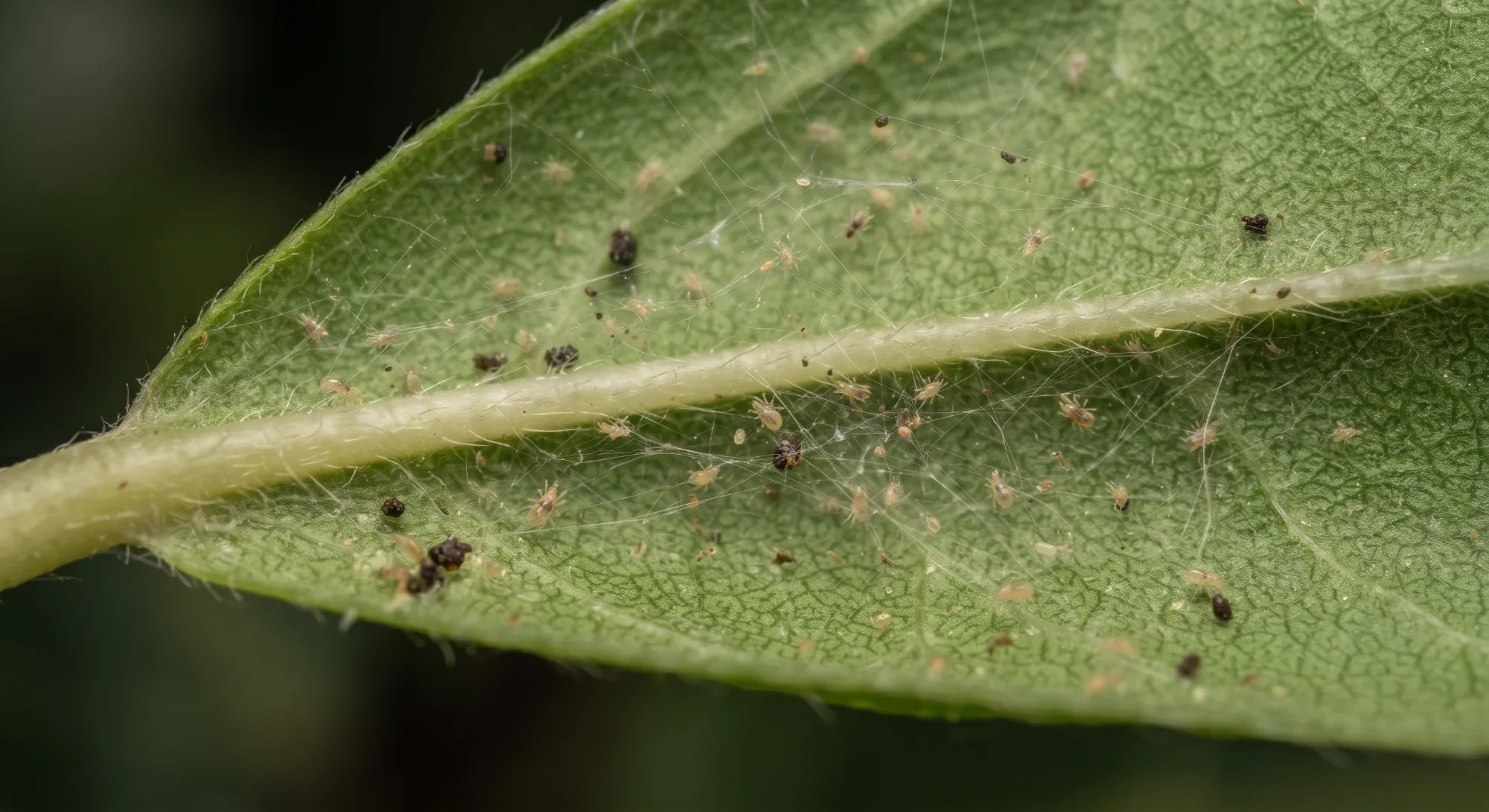
- What they look like: Not true spiders that spin webs for shelter, these are pinprick-sized arachnids that cluster on the undersides of leaves.
- The Signature Damage: Fine, dusty webbing stretched across leaf axils and nodes. The leaves take on a pale, speckled, chlorotic yellow look before drying out and dropping off.
- The Vibe: They thrive in dry, stagnant winter air when home heating is cranked up and indoor humidity bottoms out.
3. Mealybugs
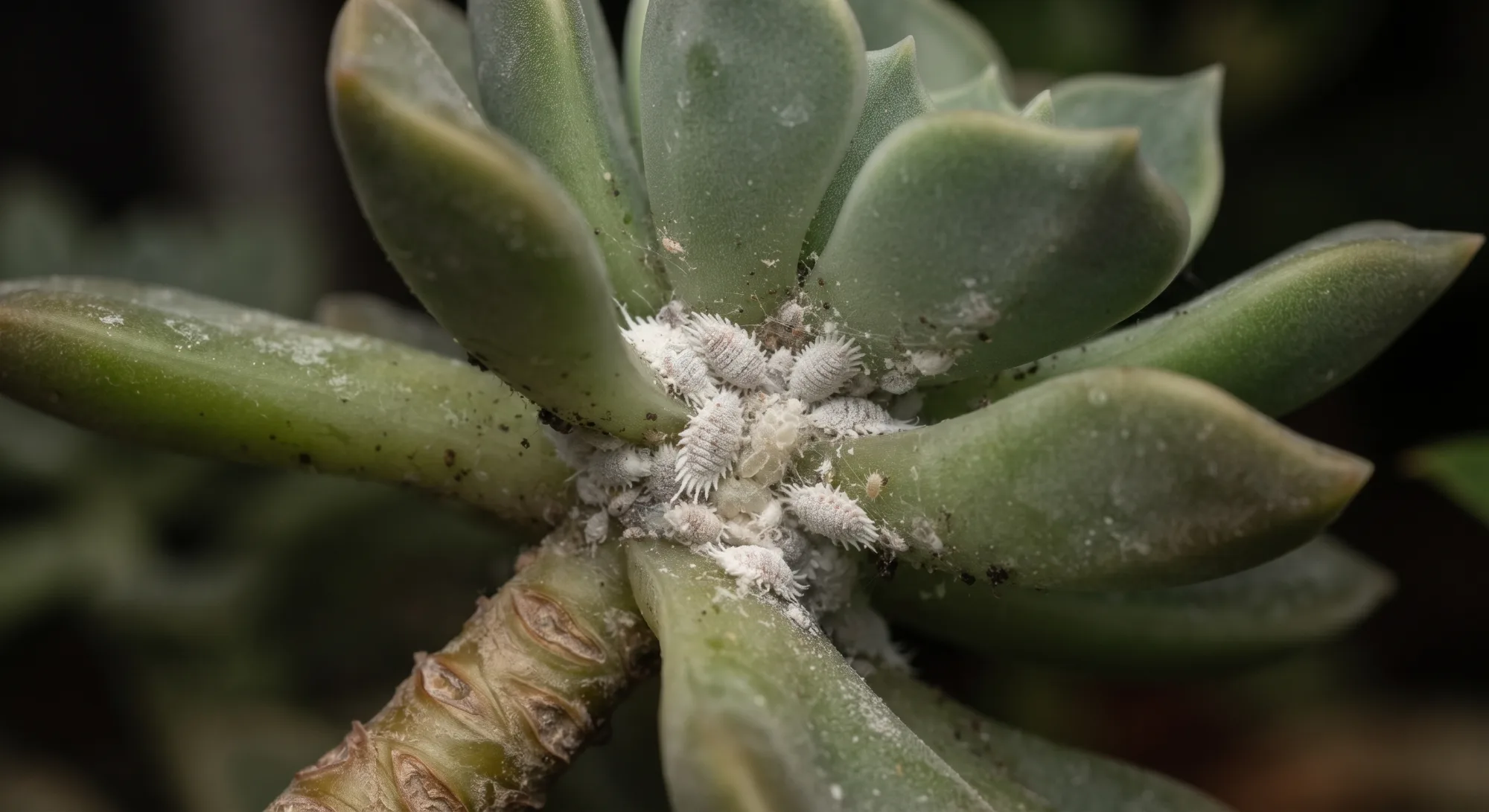
- What they look like: Tiny, soft-bodied insects covered in a white, cottony, waxy secretion. They look like little bits of discarded Q-tip fluff nestled tightly in leaf axils, stems, and crevices.
- The Signature Damage: Stunted growth, distorted new leaves, and sticky "honeydew" secretions that coat the foliage and attract black sooty mold.
- The Vibe: Deceptively cute until you realize they are stationary vampires multiplying out of sight in the tightest joints of your plants.
4. Scale
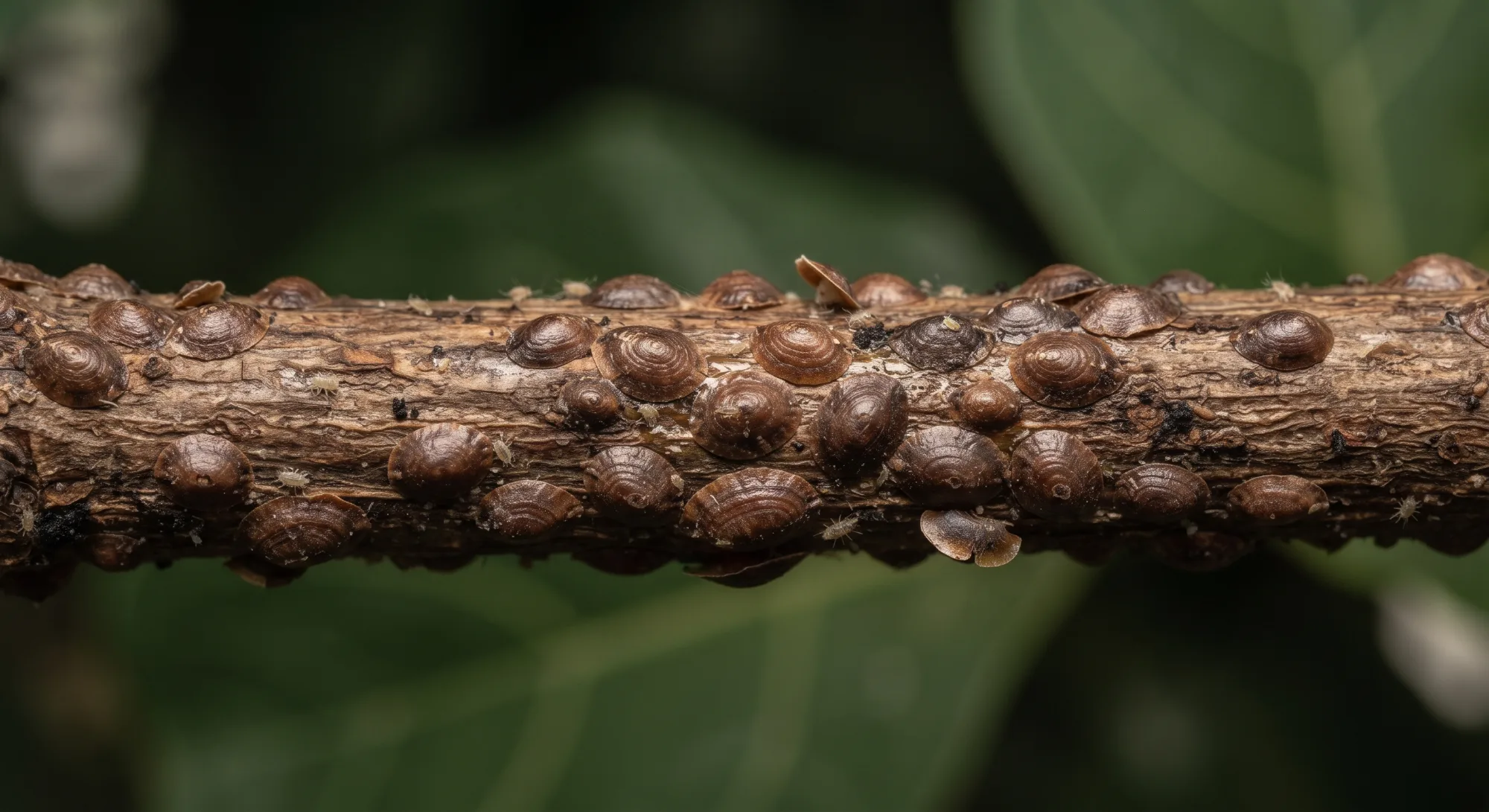
- What they look like: Small, immobile brown, tan, or grey bumps stuck tight to stems and major leaf ribs. They look like tiny oyster shells or hardened scabs.
- The Signature Damage: Like mealybugs, they suck phloem sap, weakening the plant while leaving sticky honeydew behind.
- The Vibe: They look so much like part of the plant’s natural bark or stem structure that you won't notice them until you try to scratch them off with a fingernail.
5. Fungus Gnats
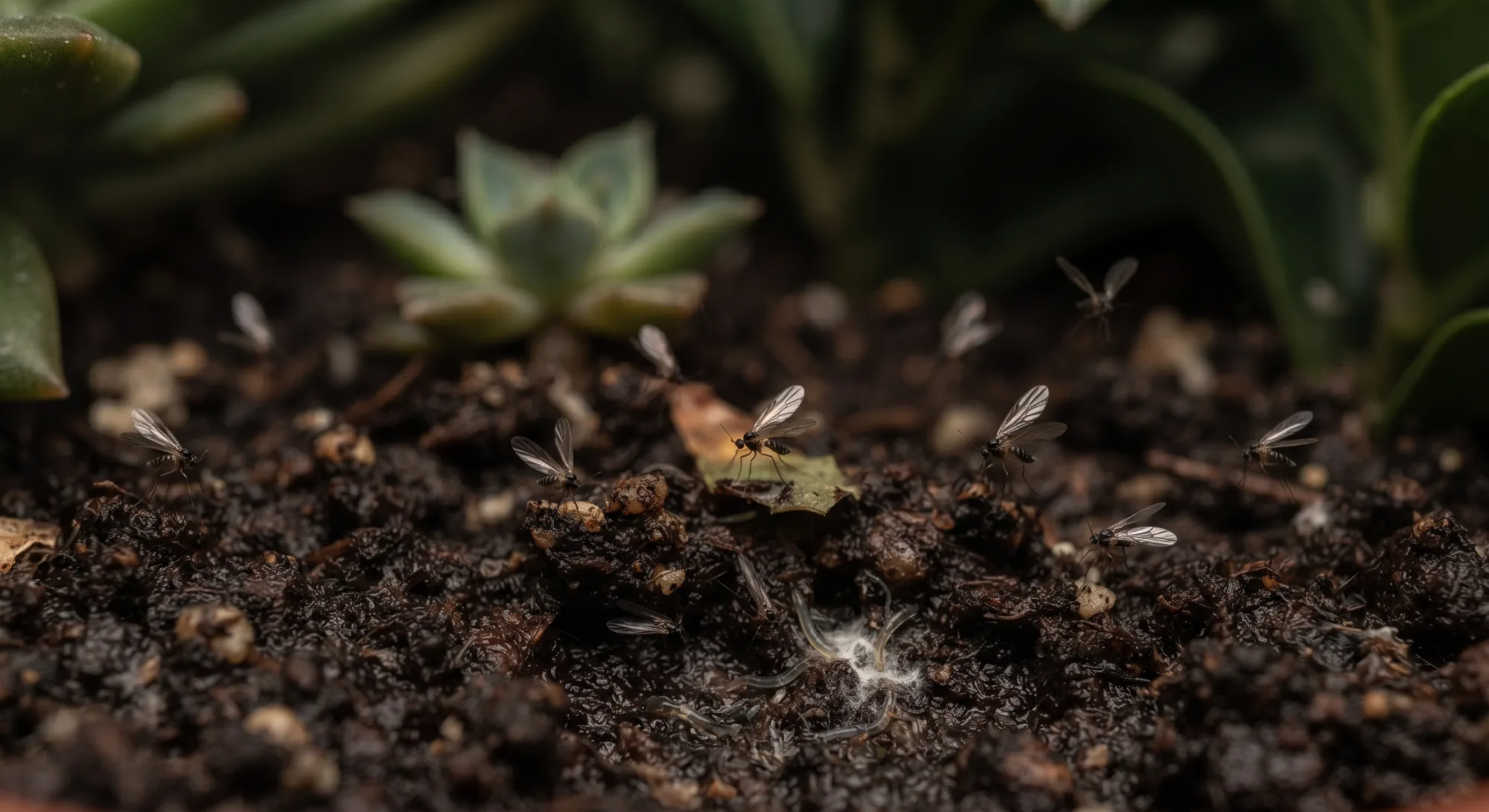
- What they look like: Small, frantic black flies darting around the top layer of your potting soil.
- The Signature Damage: The adult flies are completely harmless to the plant—they don’t bite foliage, they just annoy you when you walk past. However, their translucent larvae live in damp soil and munch on fine root hairs.
- The Vibe: A symptom of a soil mix staying wet for too long, rather than a catastrophic leaf-killer.
Part 2: The Playbook (How to Get on Top of Them)
When you spot an infestation, escalation should be methodical, not nuclear. Follow this sequence before reaching for heavy commercial sprays:
Step 1: Quarantine Immediately
The second you spot a suspect, remove it from the collection. Do not let it host a multi-species rave on your neighbouring plants. Move it to a staging area (like a utility room or a separate bathroom).
Step 2: The Physical Scrub (The Sink Protocol)
Before buying a single bottle of treatment, take the plant to the sink or shower. Use a damp microfiber cloth, a soft brush, or a gentle stream of tepid water to physically wipe and wash away 80% to 90% of the population, eggs, and webs in one go. Mechanical removal is your strongest first-line defence.
Step 3: Targeted Treatments
- For Mealybugs & Scale: An artist's paintbrush or Q-tip dipped in 70% Isopropyl alcohol acts as an elite sniper rifle. Dab it directly on them; it dissolves their waxy protective coating instantly on contact.
- For Thrips & Spider Mites: Use an insecticidal soap or horticultural oil (like neem oil or mineral oil). You must coat the entire plant—undersides of leaves, stems, and the soil line—because oils and soaps work via direct contact, suffocating the pests and their eggs.
- The Golden Rule of Treatment: Repeat every 5 to 7 days for at least three cycles. Most treatments kill living pests but leave eggs untouched. If you spray once and quit, the next generation will hatch a week later and throw a victory party.
- For Fungus Gnats: Let the top 2–3 inches of your potting mix dry out completely between waterings (gnat larvae need moisture to survive), and top-dress your soil with mosquito dunks or bits containing Bacillus thuringiensis israelensis (BTI), which safely targets the larvae in the soil.
Part 3: Small Habits for a Healthier Jungle
The best defense against pests isn't a cabinet full of aggressive chemicals; it's environmental resilience. Stressed, dusty, and dry plants send out chemical distress signals that essentially send an open invitation to passing insects.
By integrating a few small habits into your routine, you tip the balance heavily in your favour:
- Regular Leaf Hygiene: Wipe down your broad-leafed plants (like Monstera or Ficus) with a damp cloth every few weeks. Dust blocks stomata, reduces photosynthetic efficiency, and creates a cosy micro-habitat for mites. Clean leaves are inherently healthy leaves.
- Keep Air Moving: Stagnant air is a breeding ground for fungal spores and slow-moving pests like spider mites. Running a small oscillating fan in your plant room or workspace keeps the air dynamic, thickens plant cell walls, and disrupts flying pests.
- Mind Your Humidity: Mites despise moisture. Maintaining stable ambient humidity or grouping high-moisture plants together naturally suppresses mite populations before they can establish a colony.
- The New Arrival Quarantine: Treat every new plant like an international traveller passing through customs. Keep them separated from your main collection for at least two to three weeks, inspect the leaf axils under bright light, and do a preventative wash before integrating them into the jungle.
Honourable Mention: House Pets (Cats, Dogs, and Curious Roommates)
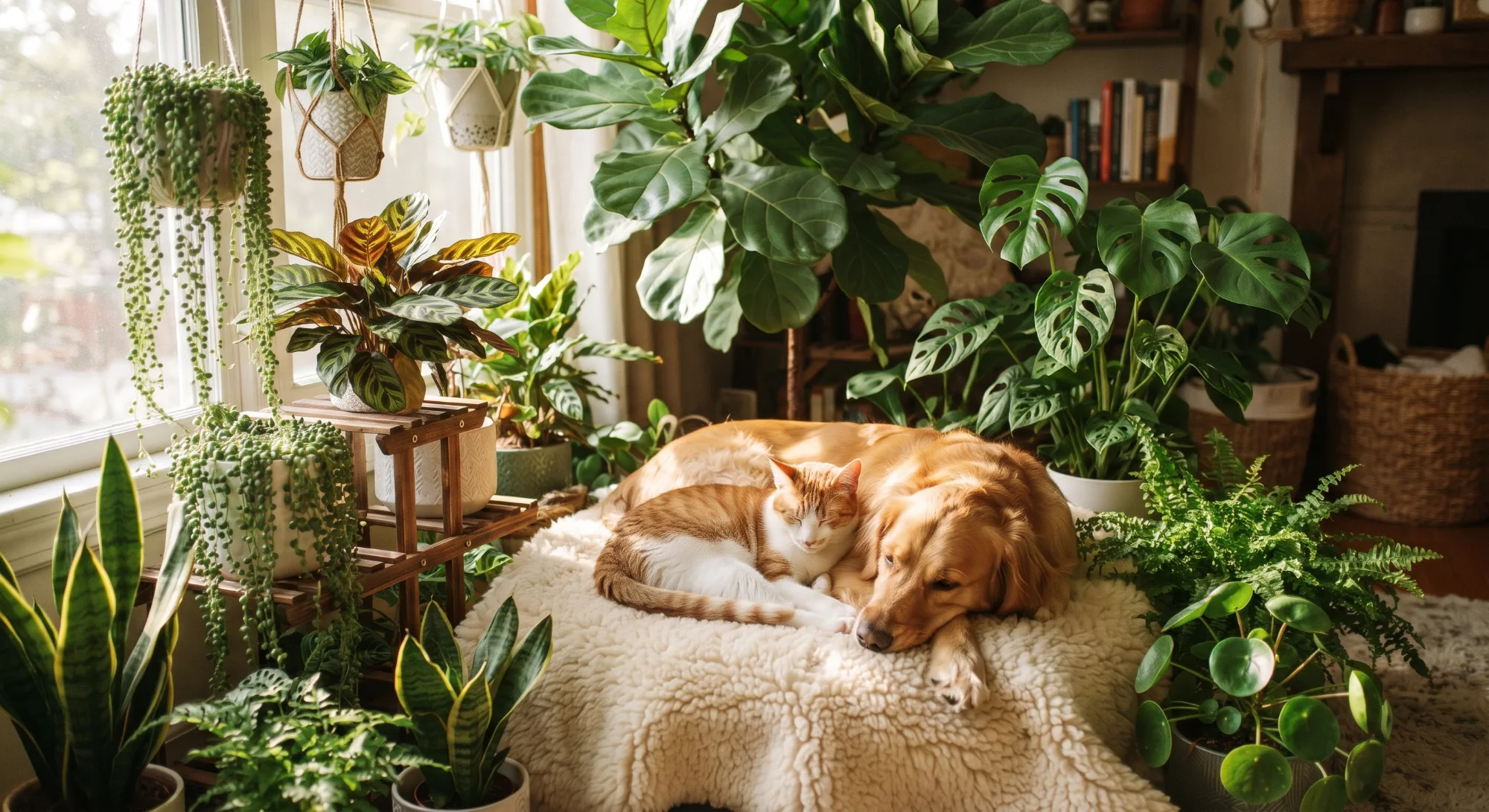
- What they look like: Furry, four-legged, utterly charming, and entirely convinced that every trailing vine, monstera fenestration, or fresh pot of soil is a personal toy, climbing frame, or salad bar.
- The Signature Damage: Dug-up potting soil scattered across your clean living room rug, snapped stems from enthusiastic head-rubbing, mysterious bite marks on leaf tips (often followed by frantic Google searches to check if the plant is toxic), and heavy ceramic pots mysteriously gravity-tested onto the floor.
- The Vibe: Complete and utter unrepentance. They don't suck phloem sap or weave webs; they just test your emotional resilience and your interior design skills.
How to Get on Top of Them:
- Vertical architecture: Move prized or toxic plants to high shelves, wall mounts, or hanging baskets where paws cannot reach.
- Diversion tactics: Grow a dedicated pot of cat grass nearby to give them an approved target for their grazing instincts.
- Physical deterrents: Strategic placement of textured items, plant stands, or harmless deterrent sprays (like bitter apple) if they have a stubborn chewing habit.