Reflections
Consolidation, Division, & The Good Kind of Tired
Now Playing
New Found Glory – Failures Not Flattering
Headspace
Calm, clear-headed, and physically tired in the best possible way.
Combining plants changes their microclimate. Together, their collective root system holds moisture more evenly, creates a broader canopy for humidity, and gives individual stems the support they lacked on their own.
This week brought a shift in tone—both on the plant shelves and in my own internal atmosphere.
For the first time in a long while, a genuine sense of calm settled in. It wasn't the fleeting kind of peace that comes from ignoring real-world pressures, but the steady, quiet clarity that arrives when your mind and body finally align on where you’re going.
I feel less reactive. I’m giving myself the time to sit with thoughts before acting on them. While I’m exhausted by the end of the day, it’s a physical fatigue from doing hands-on, meaningful work—not the heavy, soul-draining exhaustion of staying in high-alert survival mode.
My body is tired, but for the first time in a very long time, I can feel that I’m on the mend—and actually believe it.
Unspooling Roots: Consolidation & Division
The plant bench saw a lot of heavy soil work this week, centered around two very different botanical puzzles: consolidating struggling foliage versus dividing what had grown too dense.
First came the Peace Lilies (Spathiphyllum). Sitting in individual small pots, several shoots were ailing, constantly drying out, and struggling to maintain structural integrity. Instead of watching them slowly decline in isolation, I consolidated them all into one massive, deep pot.
Combining plants changes their microclimate. Together, their collective root system holds moisture more evenly, creates a broader canopy for humidity, and gives individual stems the support they lacked on their own.
Consolidation: Pooling root strength into a single container turning isolated, struggling stems into a resilient, self-sustaining canopy.
Conversely, I tackled a massive, root-bound Monstera deliciosa. It had outgrown its space, its stems tangling in competition for light. Untangling a large Monstera is a patient process—it requires carefully teasing apart thick, woody roots without snapping the main anchor stalks.
By the end of the session, I had separated the original specimen into seven distinct plants across varying stages of maturity.
It was a stark reminder of a simple rule in cultivation: separating something isn't an act of destruction. When a plant becomes root-bound, keeping it trapped in a single tight container starves every node of energy. Giving each shoot its own pot isn't cutting it off—it's giving it the individual space required to unfurl properly.
Creating Tranquil Boundaries
In addition to the heavy repotting, I spent time building small, self-contained ecosystems. Using glass orchid vases, we crafted three miniature terrariums using leftover cuttings and a small terrestrial Apostasia specimen. Watching humidity cycle inside sealed glass is one of the simplest forms of grounding there is.
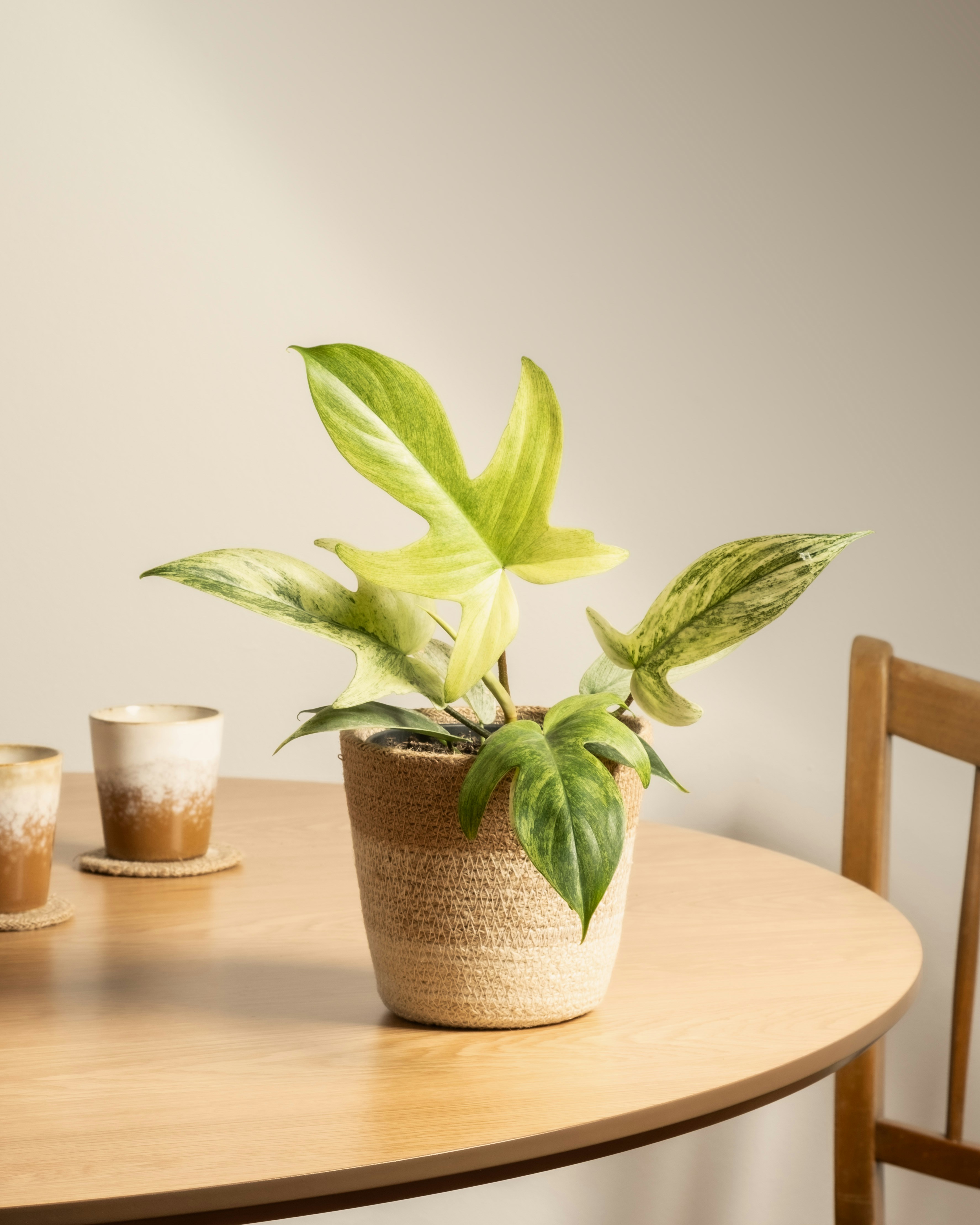
I also added a few new foliage anchors to the living room: a sizable Philodendron 'Florida Ghost' with its pale, emerging leaves, and a gentle rain-cloud mister.
The gentle ambient water droplets from the mister create an immediate physical boundary in the living room. It changes the acoustics of the space, turning a standard room into an intentional sanctuary.
Field Notes & Propagation Log
- Monstera Propagation: 7 individual potted divisions currently settling into fresh, free-draining aroid mix (coarse bark, perlite, and coconut coir). Keeping them out of direct harsh light while root shock subsides.
- Terrarium Care: Monitoring condensation levels on the new glass orchid vase builds; wiping down inner glass if fogging persists past mid-day to prevent leaf rot.
- Reflective Note: Physical fatigue from honest work cures mental noise. Build space that supports your peace, and protect the room you’ve made.