
Poinsettias: How to Avoid Festive Cheer Becoming the January Blues (And What to Grow Instead)
Even if you manage to keep them alive past January, getting them to "re-bloom" next Christmas is a masterclass in botanical bureaucracy.
Read Article
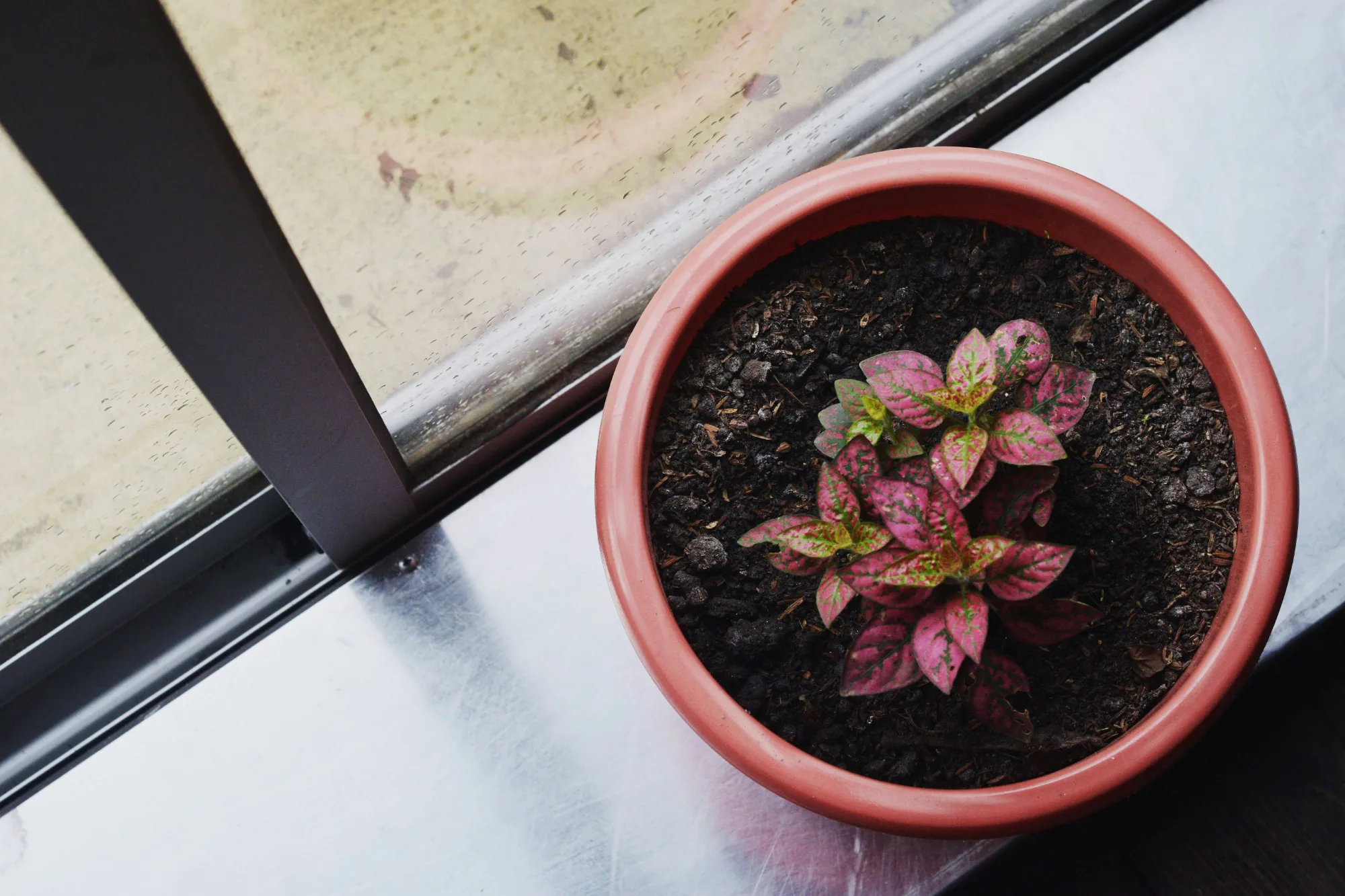
Hypoestes phyllostachya
Family · Acanthaceae
Also known as · Measles Plant, or Pink Polka Dot
While it can certainly be grown as an ordinary potted houseplant, the Hypoestes earned its place in the collection primarily as a staple of custom terrarium building. Chosen to offer a bit of textural and visual variety against the striking veining of neighbouring Fittonias, it quickly proved its worth by delivering comparable ground cover and vibrant, confetti-like colour under glass.
Native to the shaded, humid forest floors of Madagascar, Hypoestes phyllostachya is a charming, petite perennial celebrated for its vibrant, confetti-like foliage densely splashed in shades of pink, rose-red, or snowy white. Built to thrive under a protective jungle canopy, it introduces a playful, whimsical burst of colour indoors that instantly softens a room. With its delicate texture and striking contrast, it stands as a lively reminder that beauty often lives in the smallest, most intricate details.
Keep the soil consistently moist, allowing only the very top inch to dry out between waterings. This is a famously expressive plant that will dramatically "faint" and droop the moment it gets too dry—though it thankfully bounces back remarkably quickly once given a thorough drink. Avoid letting it sit in stagnant water, however.
2 parts peat-free all-purpose compost, 1 part horticultural perlite, and 1 part coco coir. A moisture-retentive yet light and breathable medium that keeps its thirsty roots comfortably hydrated without risking compaction.
Thrives best in bright, indirect light. Providing ample ambient light is essential to keeping its colourful speckles bright and well-defined; in deep shadow, the stems will stretch out and the leaves will revert to a plain, muted green. Avoid harsh, direct afternoon sun, which will scorch its delicate foliage.
Grows into a low, bushy mound typically reaching 20cm to 40cm in height indoors, responding very well to occasional pinching back to encourage a fuller, denser shape. Prefers a modest, well-proportioned pot that matches its compact root system.
2024
The Polka Dot Plant joins the collection.
Swipe through the log →
From the Journal

Even if you manage to keep them alive past January, getting them to "re-bloom" next Christmas is a masterclass in botanical bureaucracy.
Read Article
Combining plants changes their microclimate. Together, their collective root system holds moisture more evenly, creates a broader canopy for humidity, and gives individual stems the support they lacked on their own.
Read Article