Botanics
Plant Spotlight: Royalty on the Jungle Floor: The Secret Life and Stubborn Genius of Alocasias
Few plants command a room quite like an Alocasia. With their dramatic, arrow-shaped foliage, ribbed metallic veins, and architectural presence—ranging from the architectural sweep of a Macrorrhiza to the whimsical, dancing stems of a Tiny Dancer—they look more like modern art than living organisms.
They are also infamous for breaking the hearts of beginner indoor gardeners.
Buy an Alocasia from a big-box store, bring it home, place it in standard potting soil, and watch what happens: within two weeks, it drops a leaf, then another, until you're left staring at a naked stem and wondering where you went wrong.
Here is the secret most care tags miss: Your Alocasia isn’t dying; it’s executing an ancient, highly evolved survival protocol. To keep them thriving indoors, you have to stop treating them like fragile houseplants and start understanding the brutal, beautiful mechanics of the jungle floor.
The Evolutionary Blueprint: Life on the Understory Floor
Alocasias belong squarely to Territory 1: The Jungle Floor (The Understory). Native primarily to the tropical and subtropical rainforests of Asia and Australia, they live in the deep shadow of an immense natural canopy.
In the wild, they don’t bake in direct, scorching sunlight. Instead, they subsist on "sunflecks", ephemeral beams of brilliant light piercing through gaps in the upper foliage. Their broad leaves act as high-efficiency solar panels designed to capture every possible photon of filtered light.
Furthermore, their native soils are a masterclass in natural drainage. Rooted in rich, decomposing leaf litter, fallen wood, and volcanic grit, their root systems experience massive downpours followed by lightning-fast drainage and heavy aeration. They never sit in stagnant muck.
The Secret Weapon: Understanding the Corm
If you want to master Alocasias, you have to understand their secret weapon: the corm.
Unlike true bulbs or rhizomes, an Alocasia corm is a swollen, starchy, underground stem base that functions as a biological energy battery. When conditions in the wild turn hostile, such as a severe dry season, a sudden drop in temperature, or a canopy shift that alters their light—the plant makes a calculated evolutionary choice.
Instead of wasting precious metabolic energy trying to maintain older foliage in a stressed environment, the Alocasia intentionally sacrifices its outer leaves. It actively reabsorbs the water and nutrients from those leaves, pulling them down into the safety of the subterranean corm.
If you cut back a dying Alocasia and find a firm, healthy corm buried in the substrate, the plant isn’t dead. It is simply biding its time in underground dormancy, waiting for the signal to push out fresh growth.
Cracking the Indoor Care Code
Knowing their wild origins changes everything about how you care for them indoors. Here are the core adjustments required to keep your Alocasias flourishing:
1. Ditch the Dense Soil for Chunky Air
Standard, moisture-retaining potting soil is the single greatest killer of indoor Alocasias. It holds onto water for too long, suffocates the roots, and invites root rot.
- The Tweak: Engineer an airy, open substrate. Mix your peat-free base with generous amounts of chunky orchid bark, horticultural perlite, and pumice. The root zone needs to be able to breathe deeply. Many growers successfully transition them to semi-hydro or specialized chunky aroid mixes to eliminate soil altogether.
2. Respect the Light Gradient
Because they are understory dwellers, direct midday sun will scorch their broad, thin leaves within hours.
- The Tweak: Give them bright, indirect light—right up against an east-facing window or just back from a south/west exposure, ideally filtered through a sheer curtain.
3. Manage the Humidity Threshold
Dry indoor air (especially during winter central-heating season) signals to an Alocasia that it is caught in a drought.
- The Tweak: Group them together with other humidity-loving plants to build a microclimate, or place their pots on pebble trays to elevate the local relative humidity without keeping their roots waterlogged.
Specimen Showcase: 4 Alocasias That Define the Genus
1. Alocasia 'Tiny Dancer'
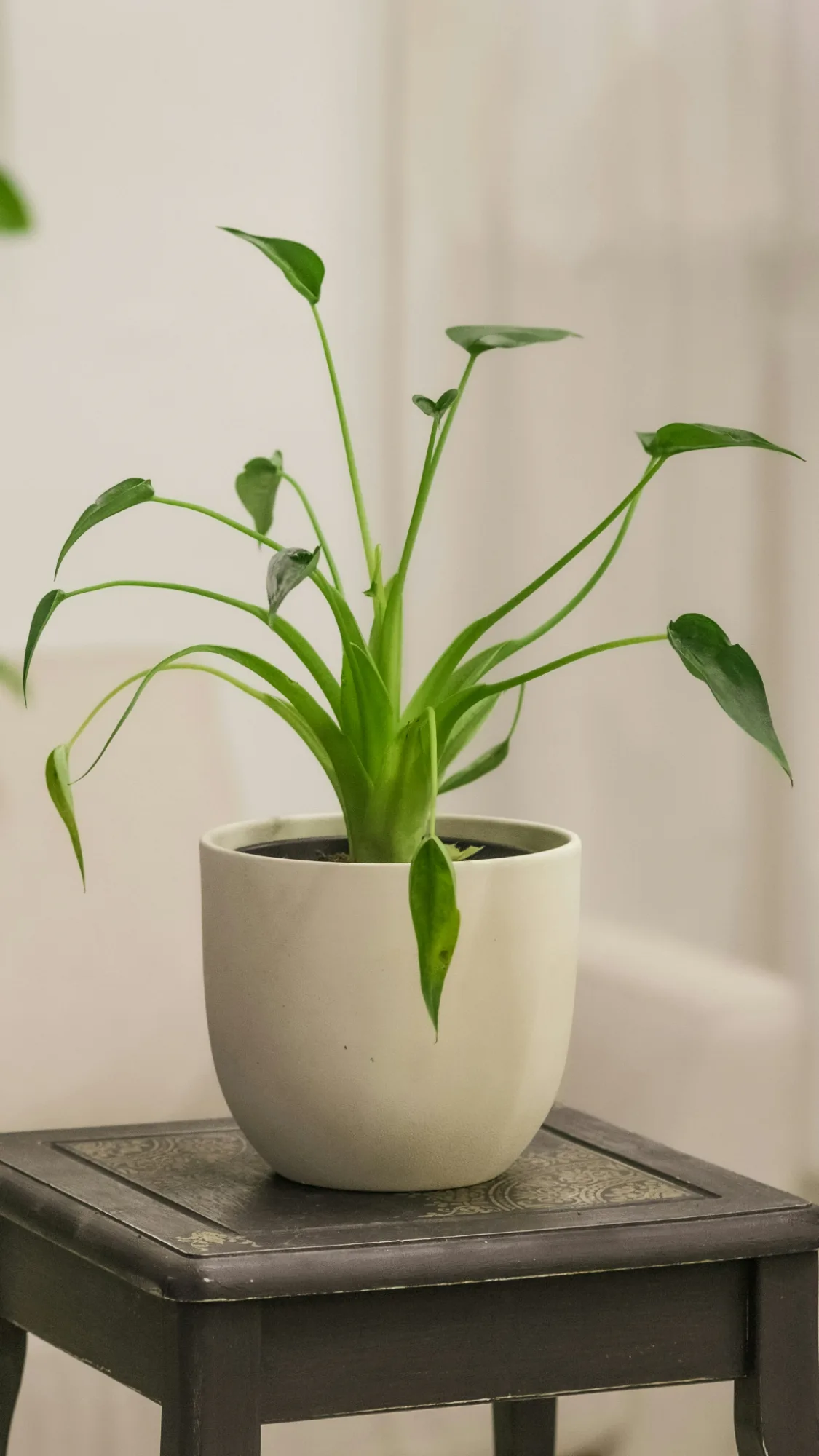
- The Vibe: Whimsical, compact, and architectural.
- Why it stands out: Unlike its giant cousins that throw massive shields of foliage, the 'Tiny Dancer' features narrow, upright, wine-red petioles topped with small, cupped, spoon-like leaves that flare outward like dancers frozen mid-spin. It forms a tight, multi-stemmed cluster that proves Alocasias aren't just about sheer size—they can be intensely intricate and playful.
2. Alocasia cuprea 'Red Secret'
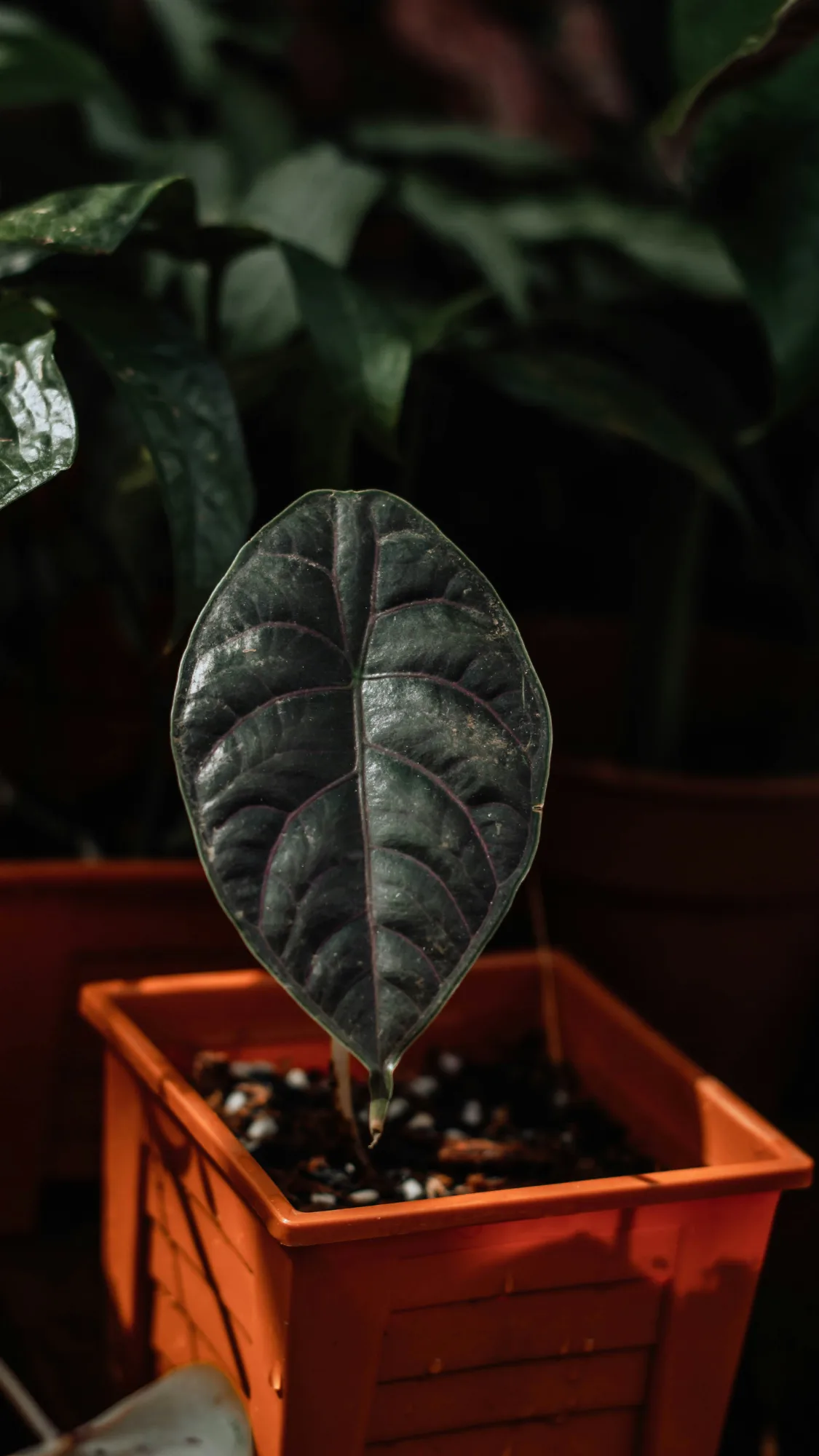
- The Vibe: Metallic, armoured, and otherworldly.
- Why it stands out: Hailing from the nutrient-poor, heavily shaded forest floors of Borneo, the 'Red Secret' looks like it’s hammered out of dark copper and bronze. Its thick, rigid leaves have a heavy, almost succulent-like leather texture and an intense metallic sheen designed to maximize light absorption under a dense canopy shadow.
3. Alocasia zebrina
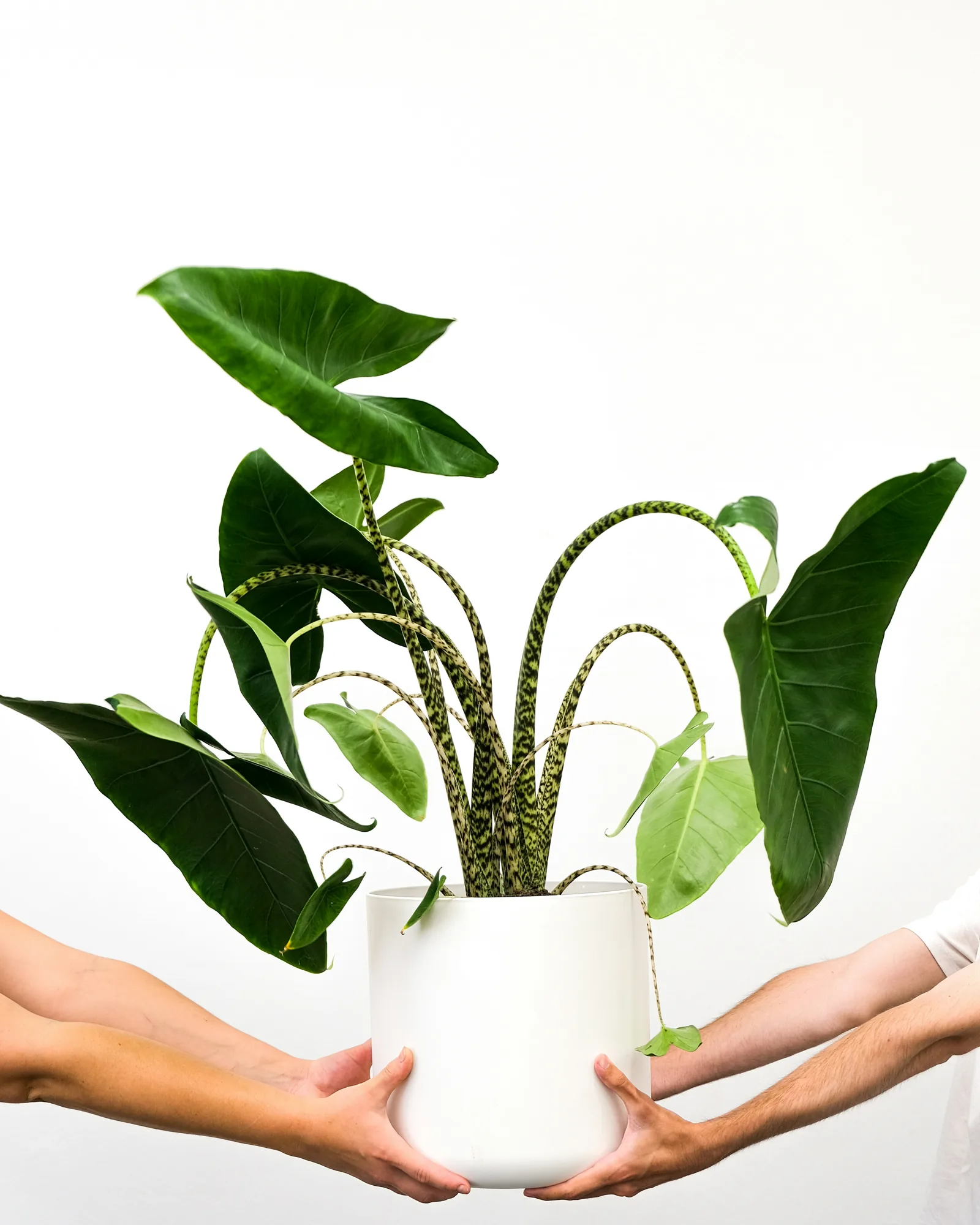
- The Vibe: Strikingly graphic and wild.
- Why it stands out: The zebrina trades solid green stems for unmistakable, tiger-striped chartreuse and dark brown/black stalks that look painted on. Those rigid, elongated stems hold large, glossy, arrowhead leaves aloft, acting like living scaffolding designed to capture dappled light piercing through high branches.
4. Alocasia amazonica ('Polly')
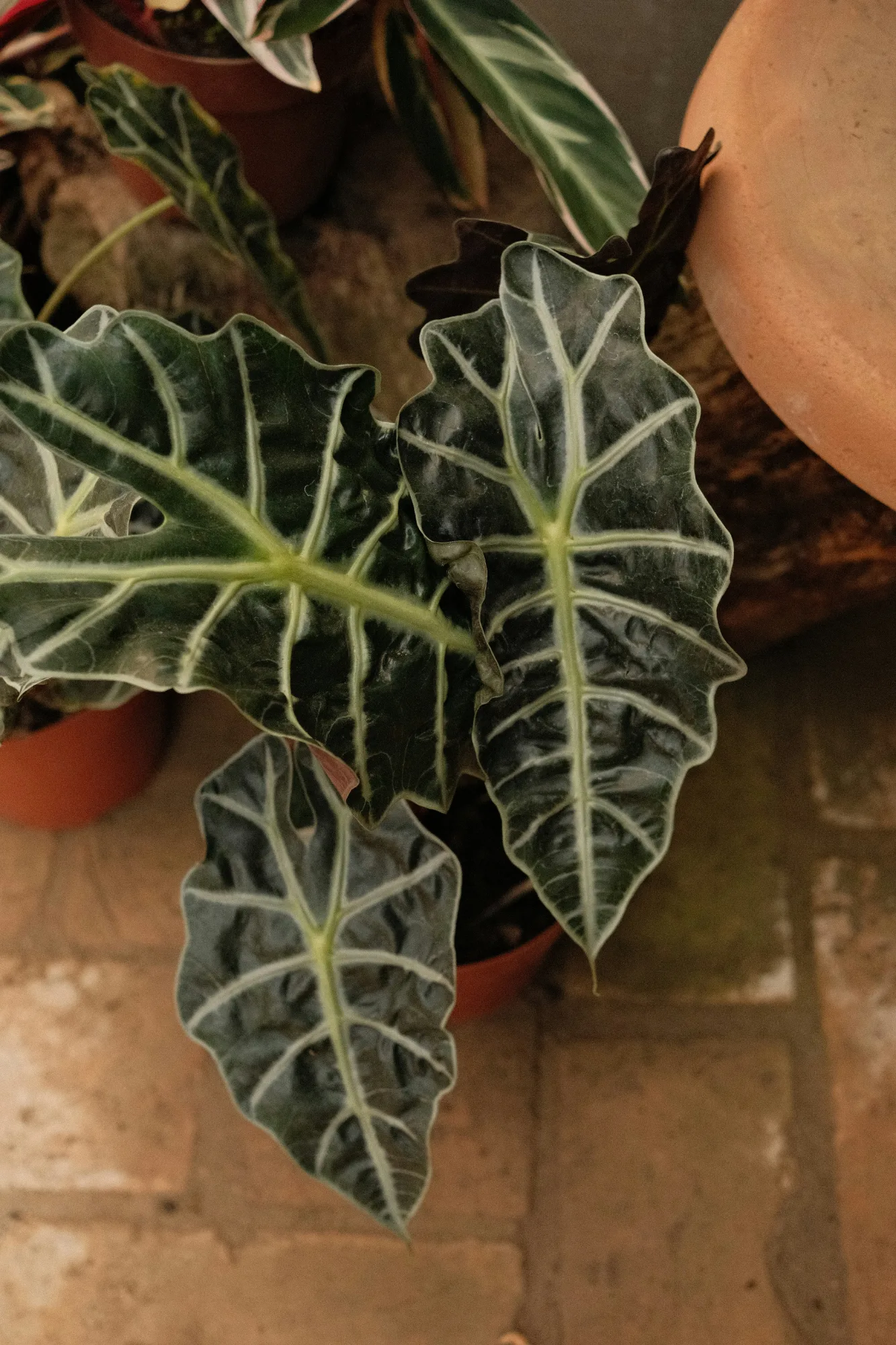
- The Vibe: The classic, high-contrast monarch.
- Why it stands out: A quintessential hybrid that commands immediate attention. Its deep, near-black forest green leaves are sharply lobed with thick, brilliant white-to-neon-green veins that look electric against the dark blade. It is the ultimate expression of the classic architectural arrow shape—and the poster child for why Alocasias require respect when brought into an indoor climate.
The Takeaway
Alocasias aren't temperamental; they are just uncompromisingly specialized. When you respect their identity as jungle-floor survivors—protecting their roots with chunky, breathable substrates, filtering their light, and recognizing that a dropped leaf is often just a tactical retreat to their subterranean corm—you stop fighting the plant and start working with its biology.
Master the corm, and you master the genus.