Back to Collection
Sempervivum — Sempervivum

Sempervivum

Sempervivum

Family · Crassulaceae

Also known as · Houseleeks, Hens and Chicks, or Live-forever

ThrivingLiving Room

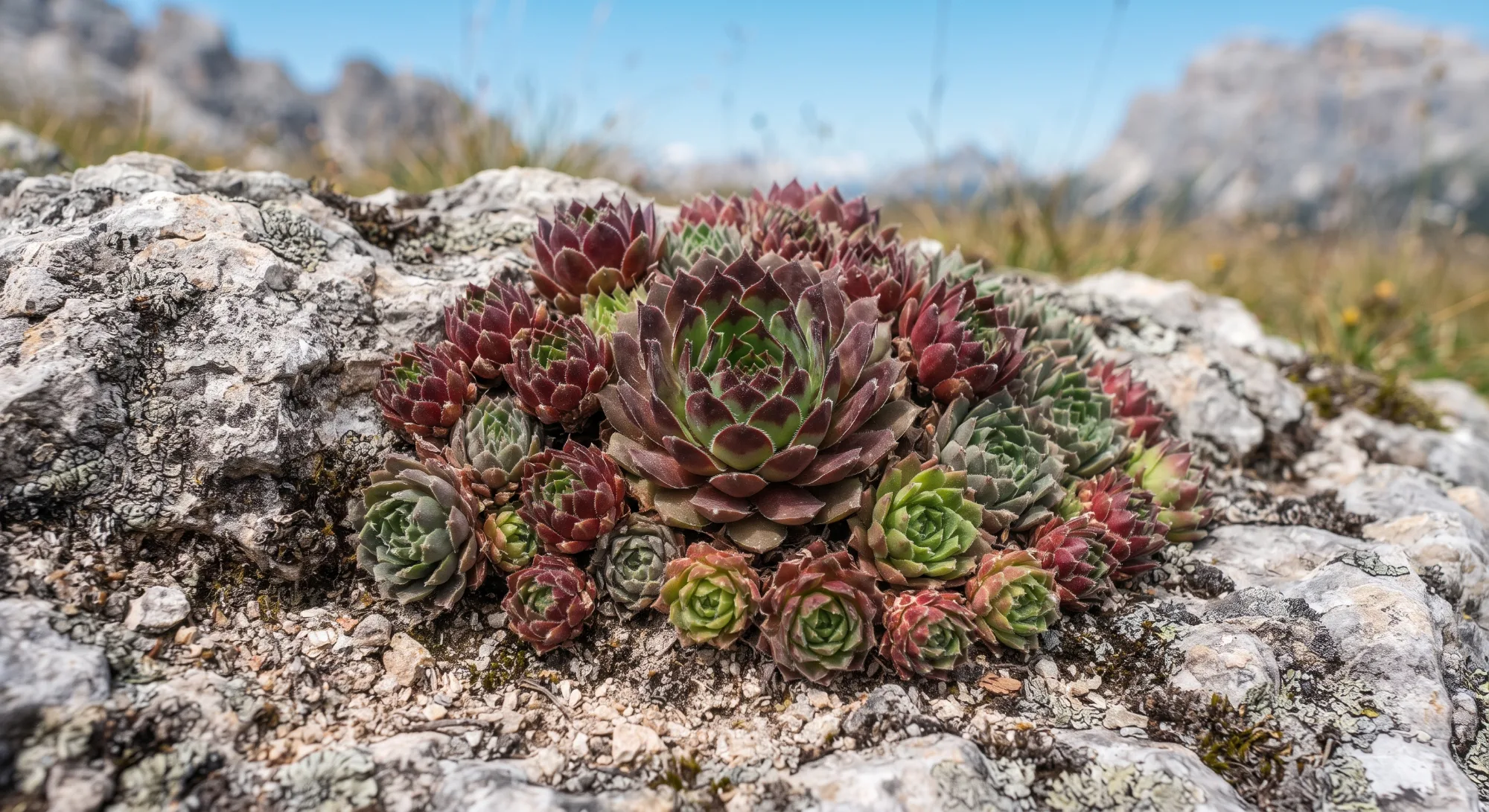
These Sempervivum entered the collection as a series of delightful, random outliers—frequently finding their way into the fold through impulsive purchases of novelty succulents or as part of mixed succulent trays. Whenever a bargain crosses my path, I am always quick to snap them up and weave them into the broader collection.

Plant Type
Succulents
Light
Direct Sun
Water
Dry Top Half
Soil Mix
Gritty / Succulent Mix
Pot Type/Size
Various
Acquired Date
2024

Personal Note

Personal note on Sempervivum

I have always held a genuine fondness for them, primarily due to the mesmerising, intricate geometry of their rosette designs. Rather than standing alone, I currently have quite a few tucked away, hiding in plain sight amongst the many custom succulent bowls I have crafted, where their enduring, sculptural charm adds a wonderful layer of texture and resilience to every arrangement.

Care & Environment

Native to the rugged, sun-baked mountainous regions, alpine screes, and rocky outcrops of Europe, North Africa, and Western Asia, from the Pyrenees and the Alps to the Carpathians, Sempervivum are marvels of alpine resilience. True to their Latin name, which translates to "always living," these hardy succulents form tight, geometric rosettes that endure baking summer heat and freezing winter snows alike. Celebrated for their habit of producing numerous offsets, famously known as "hens and chicks", they carpet the ground in intricate patterns of green, bronze, ruby, and silver.

  • Watering Routine

    Allow the potting mix to dry out thoroughly between deep waterings. While they are exceptionally drought-tolerant and handle dry spells with ease, they appreciate regular moisture during the active growing season. Ensure excellent drainage so they never sit in stagnant, waterlogged soil, particularly during wet winter months.

  • Soil Blend Recipe

    2 parts coarse horticultural grit or sharp sand, 2 parts perlite or pumice, and 1 part lean, peat-free compost. A lean, gritty, fast-draining substrate that replicates the rocky, nutrient-poor mountain slopes of their natural habitat, preventing root rot while anchoring the plant firmly.

  • Light & Micro-Location Details

    Thrives best in full, uncompromised direct sunlight. Ample direct sun is vital to maintaining compact, densely packed rosettes and bringing out their striking, stress-induced autumnal colouration. Placing them in shadier spots will cause them to stretch, lose their form, and fade in vibrancy. They excel outdoors in rockeries, alpine troughs, or on sunny windowsills and balconies.

  • Dimensions & Potting Specs

    Grows in low, clustering rosettes ranging from 2 cm to over 15 cm across depending on the cultivar, spreading outward over time via stoloniferous offsets to form dense mats. Prefers shallow, wide containers or specialized alpine pots that accommodate their spreading habit while promoting rapid soil evaporation.

Growth Timeline & Milestones

  1. 2024

    The Sempervivum joins the collection.

Swipe through the log →

From the Journal

Journal Entries Featuring This Plant

  • Blueprint Of The Wild: Why Your Houseplants Aren't Just Decorations
    14th November 202610 min read

    Blueprint Of The Wild: Why Your Houseplants Aren't Just Decorations

    As you progress in your plant journey, you realize a fundamental truth: no plant is just a plant. Every single leaf, stem, and root sitting in your home is a living archive, shaped by millions of years of combat, adaptation, and survival in a very specific corner of the planet. They are delicate, highly specialized echoes of their native environments.

    Read Article