
Back to Collection
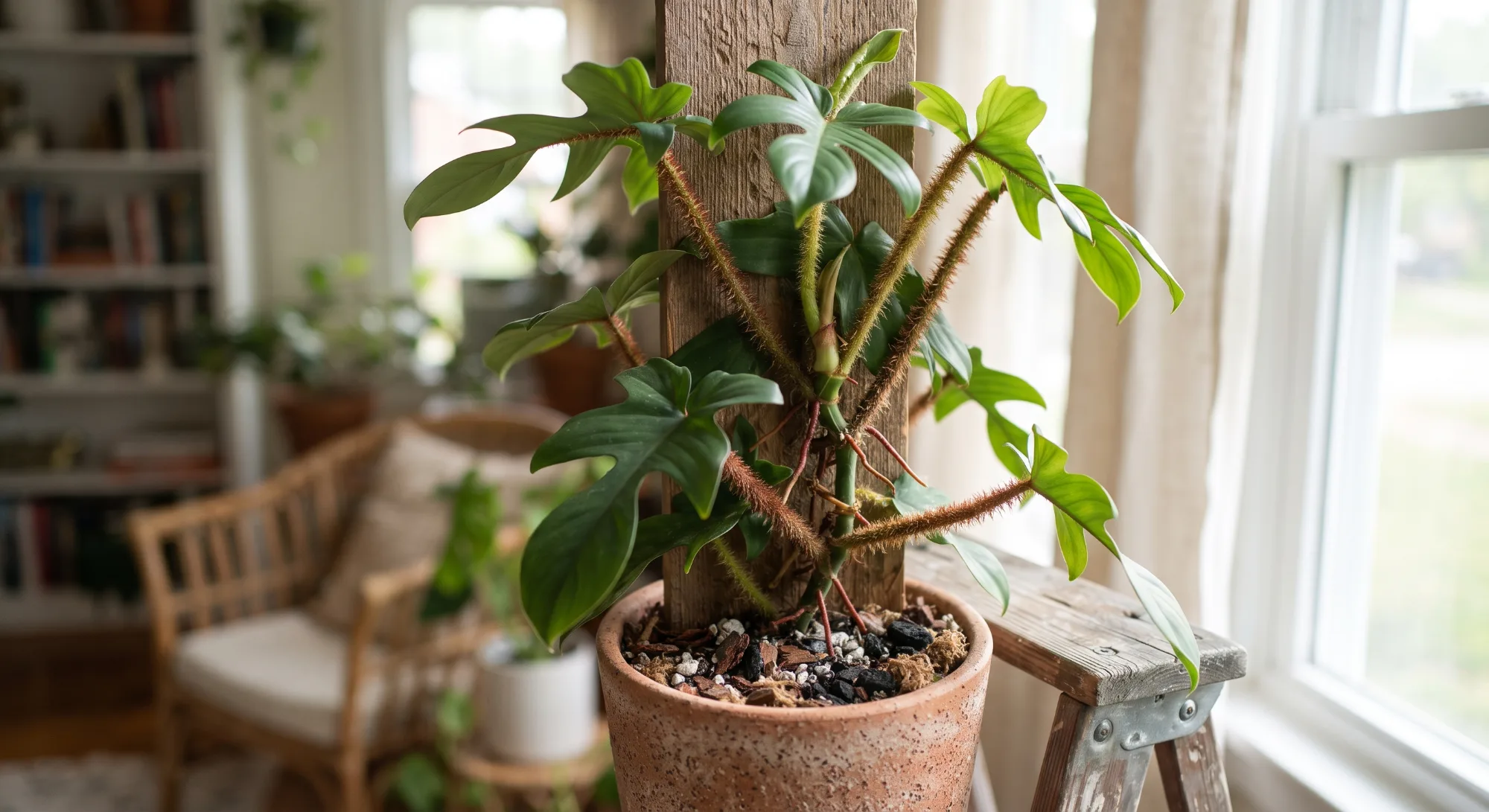
Philodendron 'Hairy-Petiole' — Philodendron squamiferum

Philodendron 'Hairy-Petiole'

Philodendron squamiferum

Family · Araceae

Also known as · Scaly-Stem Philodendron

ThrivingLiving Room

This Philodendron squamiferum entered the collection entirely by random and unintentional chance during a fateful Sunday weekly shopping trip. Stopping off at Ben Reid Garden Centre near the Aldi at Countesswells, I was genuinely taken aback by the eclectic mix of plants, many of which I had never laid eyes on before during this relatively early stage of my houseplant journey. Marking one of the very first real influxes of exotic garden centre finds into a collection previously populated by supermarket rescues, it was initially mistaken, in my early ignorance, for an unusual Monstera.

Plant Type
Aroids
Light
Bright Indirect
Water
Dry Top Half
Soil Mix
Chunky Aroid Mix
Pot Type/Size
6" Plastic Pot inside a decorative glazed Plant Pot with a rod for climbing.
Acquired Date
2024

Personal Note

Personal note on Philodendron 'Hairy-Petiole'

Despite that initial mix-up, it holds the proud distinction of being the very first Philodendron to join the ranks. It has proven remarkably resilient, weathering the major life changes and upheavals of 2026 without missing a beat. More than just a survivor, this plant fundamentally shifted my botanical trajectory; its exotic and unusual characteristics captivated me and opened the door to a whole new appreciation for the genus. Truth be told, if it wasn't for this serendipitous find, the Florida Ghost would likely never have found its way into the collection.

Care & Environment

Native to the damp, humid tropical rainforests of French Guiana, Suriname, northern Brazil, and parts of the Guianas, Philodendron squamiferum is a remarkably tactile and distinctive aroid celebrated for its signature feature: dense, bristly reddish-brown hairs (or squamules) that cloak its petioles and stems. Combined with its unique, deeply cut five-lobed leaves that bear a striking resemblance to a fiddle or oak leaf, it is a climbing epiphyte that introduces an extraordinary prehistoric charm and textural contrast to any indoor plant collection.

  • Watering Routine

    Allow the top half of the potting soil to dry out completely before watering thoroughly. Like most climbing aroids, it appreciates a breathable, well-aerated moisture cycle and despises sitting in dense, waterlogged soil, which quickly compromises its root system.

  • Soil Blend Recipe

    2 parts coarse orchid bark, 1 part coco coir or peat-free compost, 1 part horticultural perlite, and a handful of horticultural charcoal. A chunky, highly aerated aroid substrate that allows oxygen to circulate freely around the root system while draining rapidly after every drink.

  • Light & Micro-Location Details

    Thrives best in bright, indirect light. Ample ambient light is vital to maintaining sturdy, upright stems and encouraging the development of its distinctive, deeply lobed leaf structure. To truly showcase its bristly petioles and natural climbing habit, provide a sturdy moss pole, cork tile, or wooden plank rather than letting it trail loosely. Avoid harsh, direct afternoon sun, which can scorch its vibrant green foliage.

  • Dimensions & Potting Specs

    Grows as an active climbing vine, with stems easily reaching 1.5 to 2.5 metres or more indoors when provided with proper vertical support. Prefers a stable pot equipped to securely anchor a moss pole or vertical support structure.

Growth Timeline & Milestones

  1. 2024

    The Philodendron Squamiferum joins the collection.

Swipe through the log →

From the Journal

Journal Entries Featuring This Plant

  • Blueprint Of The Wild: Why Your Houseplants Aren't Just Decorations
    14th November 202610 min read

    Blueprint Of The Wild: Why Your Houseplants Aren't Just Decorations

    As you progress in your plant journey, you realize a fundamental truth: no plant is just a plant. Every single leaf, stem, and root sitting in your home is a living archive, shaped by millions of years of combat, adaptation, and survival in a very specific corner of the planet. They are delicate, highly specialized echoes of their native environments.

    Read Article