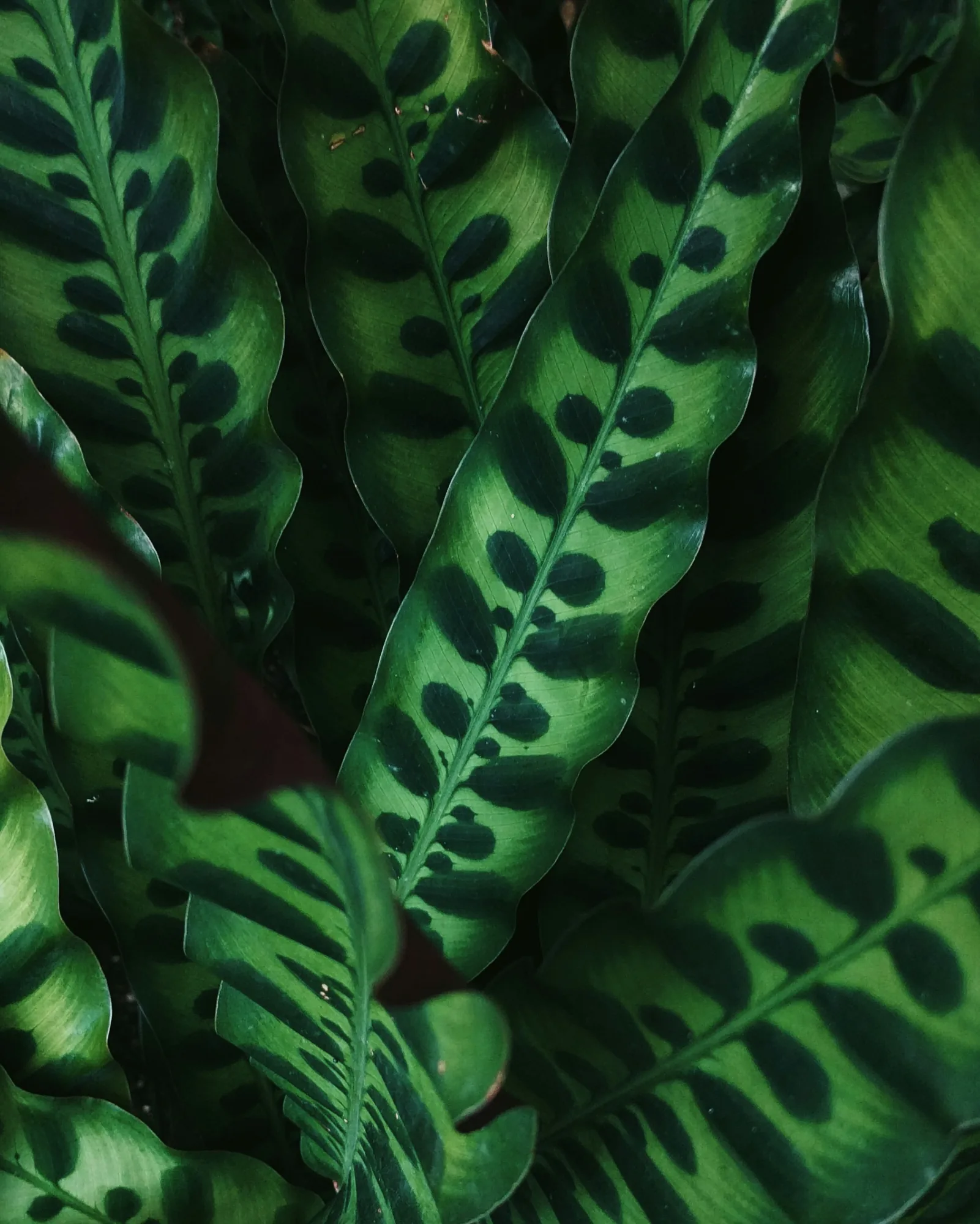
Rattlesnake Plant
Goeppertia insignis (formerly Calathea lancifolia)
Family · Marantaceae
This Rattlesnake Plant was the very first Calathea I ever brought home, purchased after reading through my first plant care book. It initially took up residence in the bathroom at the old house, before eventually transitioning to its current spot among the broader collection of Calatheas and Begonias.
- Plant Type
- Prayer Plants and Foliage
- Light
- Medium Indirect
- Water
- Consistently Moist
- Soil Mix
- Moisture-Retentive / Humus Mix
- Pot Type/Size
- 6" Plastic Pot with Saucer
- Acquired Date
- 2022
Care & Environment
Native to the warm, deeply shaded floor of the Brazilian rainforests, the Rattlesnake Plant is an arresting member of the prayer plant family, celebrated for its long, rippled, lance-shaped leaves adorned with dark green blotches and a striking deep purple underside. Built to thrive beneath a thick jungle canopy where light is filtered and humidity is absolute, it brings an unmistakable wild elegance indoors. Beyond its hypnotic foliage, it is famous for its nyctinastic movement, quietly lifting its leaves upward each evening in a nocturnal gesture of prayer, only to lower them flat again at dawn.
Watering Routine
Keep the potting medium consistently moist but never waterlogged. Like many tropicals, it is notoriously sensitive to the chemicals commonly found in tap water, such as fluoride and chlorine, which will rapidly cause brown, crispy leaf tips. Using filtered water, rainwater, or letting tap water sit out overnight is essential, paired with a potting mix that never dries out entirely.
Soil Blend Recipe
2 parts peat-free potting compost, 1 part coco coir, 1 part perlite, and a handful of worm castings. A rich, highly organic, moisture-retentive substrate that mimics a damp jungle floor while maintaining enough aeration to prevent stagnation.
Light & Micro-Location Details
Thrives best in medium, indirect light. Direct sunlight is its absolute enemy; even a brief glimpse of harsh rays will instantly scorch its paper-thin leaves and bleach out the intricate patterns. An east-facing window or a spot pulled well back from a bright room provides the gentle exposure it craves.
Dimensions & Potting Specs
Forms a neat, upright, clumping habit that typically reaches 45cm to 60cm in height and spread. Prefers a moderate pot that accommodates its tuberous root system without holding an excess of stagnant soil.
Growth Timeline & Milestones
2022
The Rattlesnake plant joins the collection.
Swipe through the log →
From the Journal
Journal Entries Featuring This Plant
No journal entries mention Rattlesnake Plant yet. New entries linked to this plant will appear here.
Browse the journal