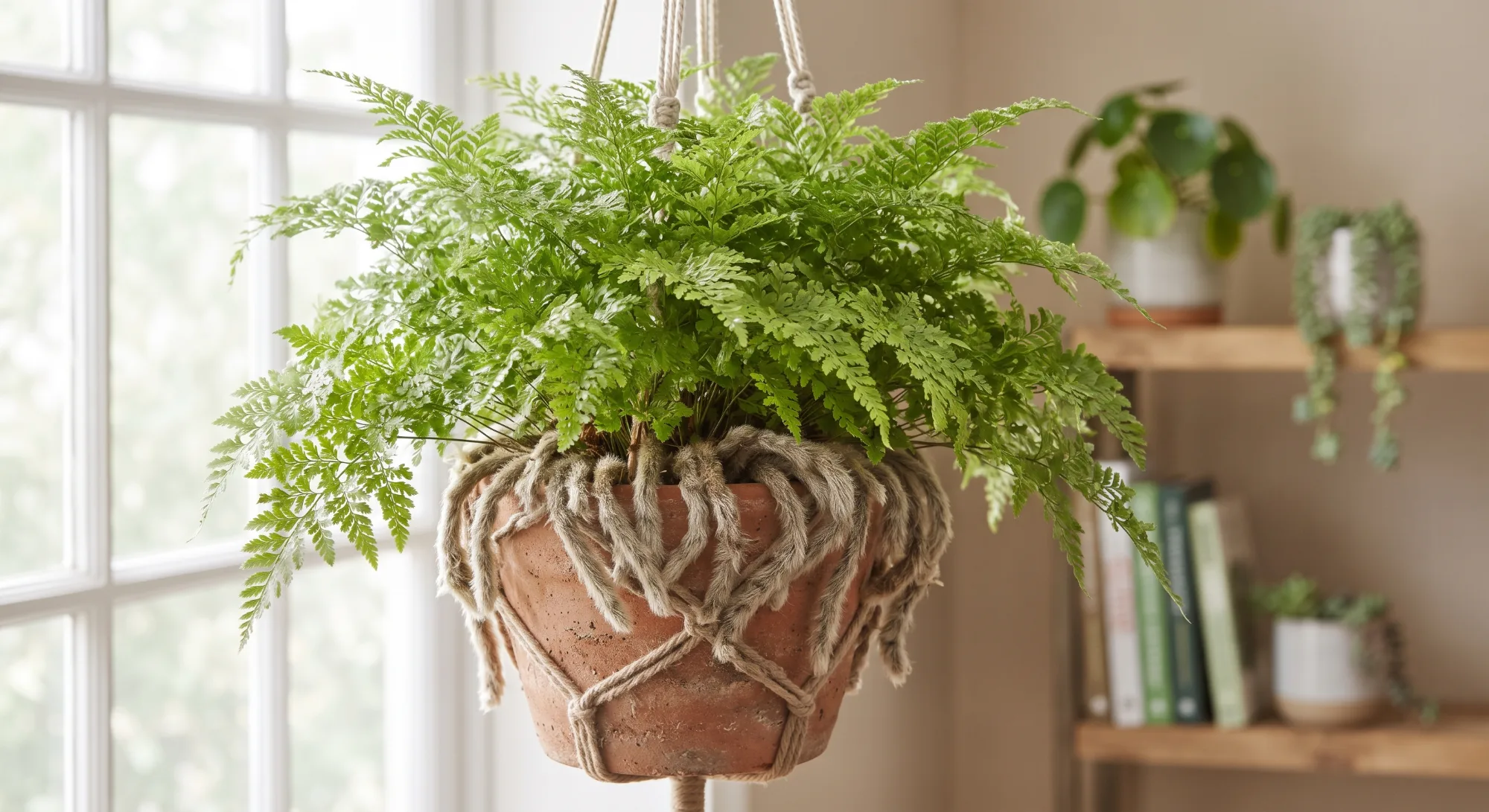
Rabbit's Foot Fern
Davallia fejeensis
Family · Davalliaceae
Also known as · Hare's Foot Fern, or Fiji Hare's Foot Fern
I acquired this Davallia fejeensis during a day that was personally significant and emotionally taxing. Having had it on my botanical watch list for a considerable time, bringing it home on that particular afternoon felt like a quiet, grounding anchor point.
- Plant Type
- Ferns
- Light
- Bright Indirect
- Water
- Consistently Moist
- Soil Mix
- Moisture-Retentive / Humus Mix
- Pot Type/Size
- Various
- Acquired Date
- 2026
Care & Environment
Native to the warm, humid rainforest canopies and mossy tree trunks of Fiji and the South Pacific islands, Davallia fejeensis, commonly known as the rabbit's foot fern, is an extraordinary epiphytic fern celebrated for its dual character. Above the rim, it unfurls lush, finely divided, lacy green fronds; below and spilling over the edges of its pot, it sends out thick, silvery-brown, fur-covered rhizomes that look remarkably like rabbit paws. Blending delicate woodland elegance with an unmistakable, tactile curiosity, it brings an organic, sculptural charm to hanging baskets and shelf edges alike.
Watering Routine
Maintain an evenly moist soil environment, allowing just the very top layer of the potting mix to dry slightly between waterings. Never let the root ball dry out completely, as this causes frond drop, but avoid leaving the pot sitting in stagnant water. When watering, pour gently around the soil rather than saturating the fuzzy rhizomes directly, and use room-temperature rainwater or filtered water where possible.
Soil Blend Recipe
2 parts peat-free organic compost or coco coir, 1 part fine orchid bark, and 1 part horticultural perlite. Because it grows naturally as an epiphyte on tree branches rather than in heavy soil, this light, airy, moisture-retentive blend keeps the shallow roots hydrated without suffocating them.
Light & Micro-Location Details
Thrives best in bright, indirect light or gentle, dappled shade. Ample ambient light encourages full, lacy frond growth while keeping the fuzzy rhizomes healthy and active. Avoid harsh, direct afternoon sunlight, which will quickly scorch its fine foliage. Like most tropical ferns, it appreciates moderate to high ambient humidity, though its fuzzy rhizomes give it slightly greater tolerance for average household air than thinner-leaved ferns.
Dimensions & Potting Specs
Grows in a graceful, spreading and cascading habit, typically reaching 30 to 45 cm in height and 45 to 60 cm in width as its fuzzy rhizomes creep outward. Prefers a shallow, wide pot or hanging basket, and should never be potted too deeply, as its furry rhizomes must sit directly on top of the substrate surface to breathe and spread.
Growth Timeline & Milestones
October 2026
The Rabbit's Foot Fern joins the collection.
Swipe through the log →
From the Journal
Journal Entries Featuring This Plant
No journal entries mention Rabbit's Foot Fern yet. New entries linked to this plant will appear here.
Browse the journal