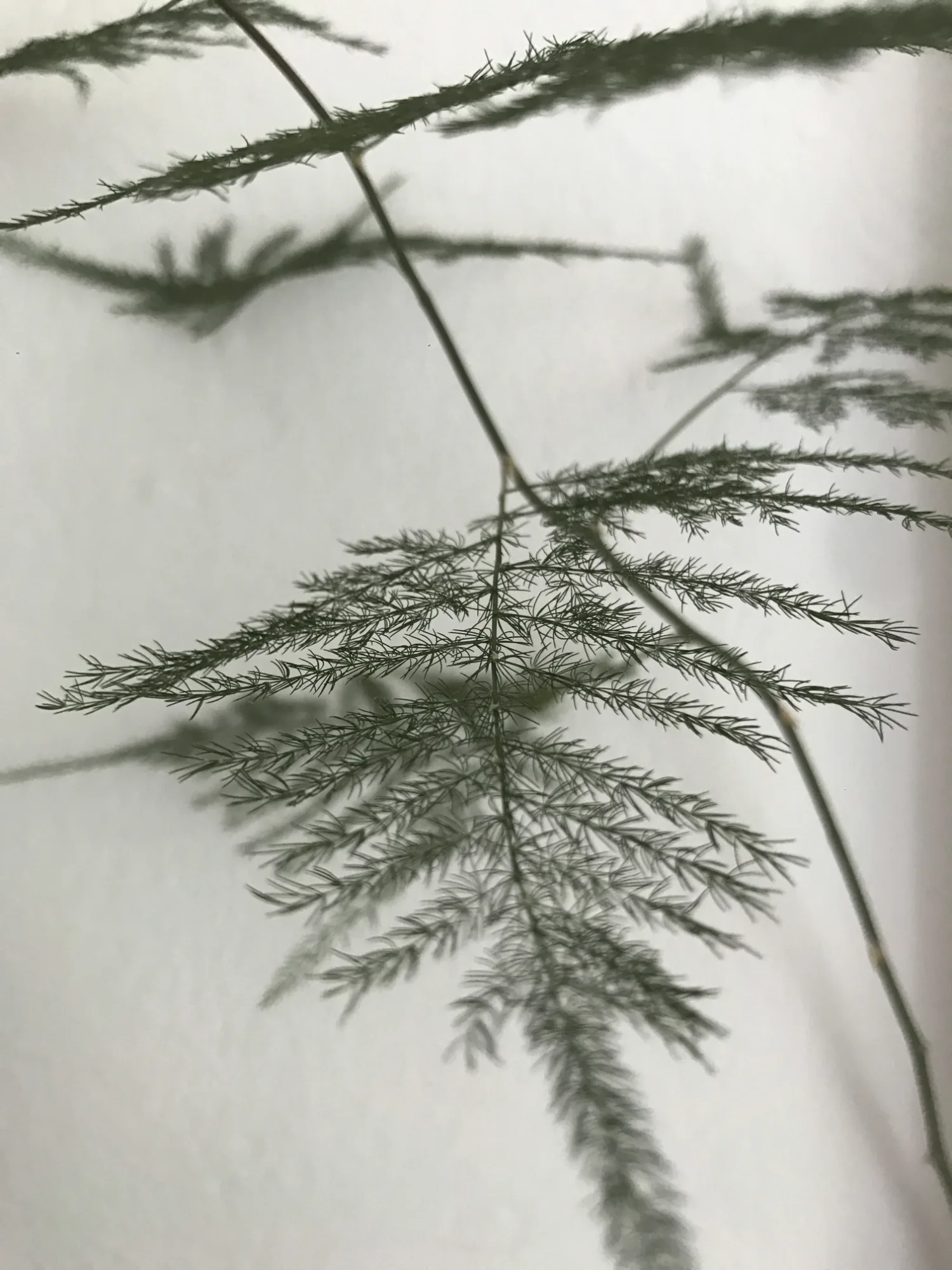
Asparagus Fern
Asparagus setaceus (formerly Asparagus Plumosus)
Family · Asparagaceae
Also known as · Lace Fern, or Climbing Asparagus
My introduction to the asparagus fern began with my very first terrarium build, where it served as a foundational piece of greenery. Having appreciated how well it settled in and held its form, I have steadily added several more specimens to the wider collection ever since.
- Plant Type
- Prayer Plants and Foliage
- Light
- Bright Indirect
- Water
- Consistently Moist
- Soil Mix
- Moisture-Retentive / Humus Mix
- Pot Type/Size
- Various
- Acquired Date
- 2022
Care & Environment
Native to the warm, dappled forest margins and coastal scrublands of Southern Africa, Asparagus setaceus is one of horticulture's finest optical illusions, not a true fern at all, but a flowering member of the asparagus family. Celebrated for its flat, horizontal sprays of feathery, cloud-like foliage composed of tiny, needle-thin cladodes, it creates an airy, misty canopy that softens sharp shelf edges and surrounding architectural plants. Graceful yet surprisingly resilient, it introduces a delicate, lacy texture and vintage conservatory charm to any indoor collection.
Watering Routine
Maintain an evenly moist soil environment during the active growing season, allowing just the top quarter of the potting mix to dry slightly between waterings. Beneath the soil, it forms fleshy, water-storing tubers that offer brief resilience against missed waterings, though prolonged dryness will trigger yellow needle drop. Never allow the pot to sit in stagnant water.
Soil Blend Recipe
2 parts peat-free organic compost or coco coir, 1 part fine orchid bark, and 1 part horticultural perlite. A balanced, breathable organic substrate that retains steady moisture for its fine roots while draining freely around its fleshy underground tubers.
Light & Micro-Location Details
Thrives best in bright, indirect light or gentle, dappled shade. Ample ambient light keeps its feathery sprays lush, dense, and vibrant emerald green. Avoid harsh, direct afternoon sunlight, which will quickly yellow and scorch its fine, needle-like foliage. While more forgiving of average household air than true ferns, moderate ambient humidity keeps the delicate cladodes from shedding.
Dimensions & Potting Specs
Grows in a arching, cloud-like mound that can reach 45 to 90 cm in height and spread indoors, occasionally sending out long, slender climbing stems as it matures. Prefers a sturdy, well-draining pot with enough depth to accommodate its vigorous, tuberous root system.
Growth Timeline & Milestones
2022
The Asparagus Fern joins the collection.
Swipe through the log →
From the Journal
Journal Entries Featuring This Plant
No journal entries mention Asparagus Fern yet. New entries linked to this plant will appear here.
Browse the journal